
California has drawn a line under sweepstakes casinos. As of the start of 2026, the state moved these sites out of the legal gray area they had occupied and shut the door on them. For the many Californians who had signed up to play, the change is not abstract. It affects accounts, balances and where the law now stands.
If you are trying to work out what happened and what it means for you, the useful thing is to understand the shift itself, not the marketing that surrounded these sites while they operated.
What actually changed

For years, sweepstakes casinos ran on a legal argument. They handed out virtual coins rather than taking cash bets, and used a sweepstakes model to offer prizes. That structure let them operate in states where conventional online casinos could not.
California decided the argument no longer held. Assembly Bill 831 closed the route, and you can read the bill text on the California Legislature’s site. The effect is that the sweepstakes model, as these sites used it, is no longer welcome in the state.
That leaves former players with practical questions. What happens to coins already bought? How do redemptions work now? These are the details worth checking on any site you used, rather than assuming.
Following the wider map
California is not acting alone. A run of states has moved against sweepstakes casinos over the past two years, some through new laws and some through enforcement by their regulators. The map is shifting fast enough that a site legal in one state is barred in the next, and the picture keeps changing month to month.
That is where a review site that tracks the law earns its place. Sweepsy, a US sweepstakes casino review site, tracks which states allow these sites and which have shut them out, and it now lists California among the states that have banned them. For a reader in California, that is the relevant fact, and it is more use than any promotion of play.
The team at Sweepsy runs more than 40 hours of hands-on testing a month and updates its legality guide daily, which is why a source like that catches a change of status quickly rather than lagging behind it.
Why the model drew scrutiny

The reason states keep moving on these sites comes down to how close they sit to gambling. A player buys coins, plays games that look and feel like slots, and can redeem winnings. Regulators looked at that and saw gambling in a different wrapper, without the consumer protections that licensed gambling carries.
Those protections matter. Licensed operators face rules on fairness, on paying out, and on helping people who gamble too much. A site operating outside those rules offers none of it by default. When a state bans the model, part of what it is doing is removing a product that ran without those guardrails.
If a former sweepstakes player finds themselves chasing losses or spending more than they meant to, the ban does not remove that risk on its own. The National Council on Problem Gambling runs a free, confidential helpline and resources for anyone in that position, and it is worth knowing about regardless of which sites remain legal.
What a California reader should do now
The sensible response to the ban is practical, not panicked.
- Check the status of any account you hold. Read what the site now says about closures, balances and redemptions.
- Do not chase a workaround. Routes that claim to get around a state ban tend to carry more risk, not less, and put your money on the wrong side of the line.
- Watch the wider map if you travel or move. The rules differ sharply by state, and what is barred at home may be legal elsewhere, or the reverse.
The through-line is simple. Know where the law stands where you are, and treat any site’s own promotion as marketing rather than fact.
It is worth separating the product from the players here. The ban targets how these sites operated, not the people who used them in good faith. A Californian who signed up when the rules were unclear did nothing wrong. The sensible response now is to understand where the law landed and act on it, rather than to feel caught out by a change that took a while to arrive.
The bigger picture
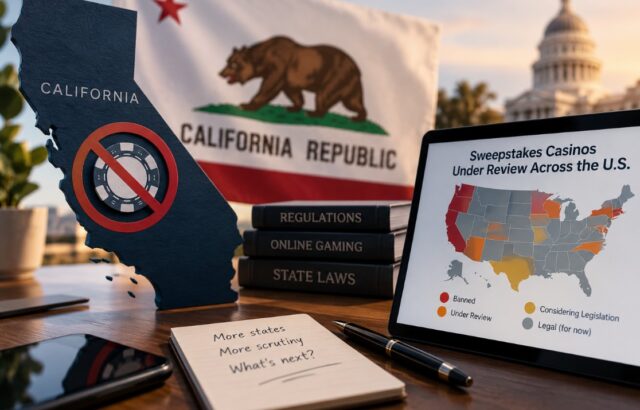
California’s ban is part of a pattern, and the pattern is toward tighter rules, not looser ones. More states are examining the sweepstakes model, and the direction of travel across 2025 and 2026 has been consistent.
For a player, that means the ground keeps moving. A site that was fine to use last year may be barred this year, and the only reliable guide is a source that tracks the law state by state and updates when it changes. In a market this unsettled, knowing the current rule where you live is worth more than any offer a site can put in front of you.